Showing posts with label tips. Show all posts

Thursday, February 28, 2008

Sustainable Valentine's Day


I didn't want to close out February without a nod to Valentine's Day.

In keeping with my goal this year to reduce my intake of stuff, to celebrate V-Day, I applied a few of the suggestions from my Holiday Survival Guide.

The Intangible Gift

With my own krafty little hands, I created my version of the coupon/gift card:

Themed Origami Hearts

The design of each represented the sentiment I wished to express or something I promised to do for my True Love.

Best of all . . .

. . . No new materials were bought or brought into the house to make this gift.

I repeat: No new materials were bought or brought into the house to make this gift.

Drawing From The Stash

  • designed my own origami paper using clip art and my handy dandy word processor
  • printed the designs on paper already in my possession
  • searched the Internet for folding instructions in order to make the hearts
  • practiced the paper-folding technique using sheets from my Recycle Paper Pile, before finally folding with the paper I designed
  • embellished the folded hearts with a bit of ribbon
  • selected a gift box in which to place the hearts, from my collection of same (What!? You don't have a collection of gift boxes. . . ?!)
. . . and VOILA!

Saturday, January 26, 2008

Swapsimple

Another swap site that I looked into as an Exit Strategy for my CDs and DVDs was SwapSimple. At SwapSimple you can trade books, DVDs and video games, but not music CDs (go figure!). Setting up an account was easy enough. I provided an email address, made up a password and I was in like Flynn. I then received an email confirming my registration which included a clickable link leading to a few other questions to answer, such as how I'd heard of the site, my age (you must be 18 years or older), and stuff like that.

However, for me, that's about where the "simple" part of SwapSimple hit the road, and what I will mostly be discussing in this post.

  1. Shipping

    SwapSimple members can print a free shipping label, which to me was very appealing. 'Nuf said!

  2. Avoiding the Post-office

    Of course the pre-paid shipping label also removes the need to go to the post office, so long as your item weighs less than one pound. Another plus!

  3. Liner notes, artwork & case

    SwapSimple, members are expected to send all accompanying material, rather than just the disk alone, so that suited me as well.

  4. Simplicity

    Now, here's where things started to fall apart.

    Although, I initially listed three items, I only actually ended up trading one of them. And while I was able to send out that one item without incident, I found the actual process of doing that to be so exacting, that shortly thereafter, I delisted the other two items.

    • Pop-up Panic!

      For one thing, to even list an item for trade, in addition to my name I had to provide my gender and telephone number, something I wasn't too wild about, and wondered why that was necessary. Then, some pretty specific and rather stern pop-up instructions appeared about using the site and what needed to happen when, in order to effect a successful trade.

      There were other, similarly dire, warning pop-ups at just about every subsequent step of the transaction, through finally printing the shipping label once someone requested one of my items.

      Don't Get Me Wrong! In and of themselves, none of the stipulations were at all unreasonable. I definitely understand that some people need to have such things spelled out as explicitly as possible, because left to their own devices they simply won't follow through. Still, as a fairly reliable sort, myself, I was left feeling vaguely anxious. Even with the best of intentions, we all can slip up at one time or another. I tend to pursue several Exit Strategies at a time in order to maximize the chances of actually getting rid of something! As far as I'm concerned, all bets are on until that item is out of my house and into the hot little hands of someone else. So, I was terrified that I might fail to remove a no longer available item from my SwapSimple inventory quick enough! Consequences for such a failure included possible penalty charges or the suspension of my account.

    • Point System

      SwapSimple says that their point system is straightforward, but it seemed a little complicated to me. The site figures out and assigns a "market" value to the items you post. You receive a fraction of that value immediately upon listing the item (aka Instant Trade Credits) and the rest of it upon successfully completing your trade. From this standpoint you begin accumulating points and can request items right away. Also, as long as you have points, you can trade for any category of item. For example if you trade a book, you are not limited to requesting another book. You can request a DVD or a video game of whatever value, so long as you have accumulated the necessary points.

      However, when I went back to check on my account after the one trade I completed, I was surprised to find out that I hadn't earned any credits! I contacted Customer Service about it and to their credit , they got back to me pretty promptly. They explained that my trade item had a "market value" worth less than $0.50 and that they only award credits in whole numbers. Unfortunately for me, they round down instead of up. So my traded item ended up being worth zero points instead of one. They further advised that there were many 0-credit items that could be requested. I checked this out this category, but there weren't all that many things available, at least on the date I looked. But, in honor of completing my first swap, SwapSimple credited my account five points. Still, if I had not contacted them, I probably would never have received these points.

      Also, swapping is not actually free, unless you are:

      • swapping within a personal swap network of friends, their friends, etc. or . . .
      • . . .swapping items worth 10 credits or less

      otherwise, trading items worth more than 10 credits with people outside of your network will cost you $1.00 (items worth 11-20 credits) or $2.00 (items worth 21 credits or more) per swap.

      While not completely inscrutable, I would not exactly call this system straightforward either.

    • Site Feel and Navigability

      Finally, swapping via the Internet is probably an inherently social activity, however I would say that this social networking aspect is very much accentuated at SwapSimple. Just to say, that this may not be everyone's cup of tea.

      Also, I am probably one of the few people left in the universe with a dial-up connection, so it took a bit of time for some of the site's graphics and doo-hickey's to load as I navigated through the site. This became a particular issue while I tried to figure out how to display my inventory. Me and my dial up connection spent more than a few frustrating minutes clicking various links and then waiting for the screens to load while I tried to figure it out what I was doing wrong.

Obligatory Disclaimer: Anyway, as I stated in last week in the SwapaCD post, this review reflects the criteria that are important to me and how this impacted my particular experience ONLY! You're mileage may vary and SwapSimple may suit your needs perfectly.

Next up: Title Trader: The CD/DVD swap site, I finally settled on.

Sunday, January 20, 2008

SwapaCD

SwapaCD is a popular music CD swap site. I actually discovered this site while checking out Paperback Swap, with whom they're affiliated (I also see they've added a DVD swap site to their offerings. I'll have to check that out!).

I have not, as of yet, used SwapaCD for reasons initially outlined in My CD/DVD Cup Runneth Over and which I will discuss in further detail below.
  1. Shipping

    While not necessarily a complete deal breaker, ideally, a swap site would allow me to generate a postage paid shipping label (either free of charge or for which the costs can at least be prepaid by credit card). SwapaCD members must pay the shipping costs when responding to requests, as well as a charge of 0.49 per trade, plus 1 CD credit. SwapaCD provides a downloadable template for a paper envelope mailer, which pulls the recipient's address information, however at this time, it does not also include the postage.

  2. Avoiding the Post-office

    In terms of ease and convenience, I would prefer to avoid a trip to the post office or waiting on a long line there. If you just send the CD in their special mailer as recommended, SwapaCD estimates that postage costs will probably be little more than a first-class stamp, give or take, and you can just drop it in the mailbox. However, if you add the goodies (jewel case, liner notes, artwork) it will probably be more. Depending on what you decide to ship, unless you have a scale at home or are comfortable guestimating the charges, a post office visit could be in your future. Which brings me to my next point.

  3. Liner notes, artwork & case

    Not so much with DVDs, but for music CDs I like having the artwork and liner notes, which can often include song lyrics or information about the artist and other musicians. A jewel case makes it easier to store, but those are otherwise easy enough to get elsewhere, if you want them.

    While SwapaCD members are certainly free to ship as much of a CDs accompanying materials as they like, in order to keep mailing costs to a minimum, SwapaCD recommends that they only ship the CD itself, using the aforementioned envelope mailer. However, they also provide tips and information about the approximate costs for various other shipping options and configurations.

    Incidentally, I have to say that at the particular time that I was considering SwapaCD, I was skeptical that a mere paper envelope would allow a CD to be delivered through the mail unscathed, while shipping them in their protective, plastic jewel cases might actually increase the likelihood of their being damaged (this in spite of proper padding which adds to the shipping costs). But, that was before I discovered and joined a popular DVD rental club and have since come to experience the efficacy of the paper envelope mailer, as paradoxical as it may seem! So far, in about a year's time, I have only had one DVD to arrive damaged.

  4. Simplicity

    Finally, a swap site should be as simple as possible to use, not only in terms of listing and tracking items for trade, but in comprehending the point scheme. Of primary concern would be

    • How is value assigned to the items being traded?
    • How do you accrue the necessary value to make requests?

    In all fairness, since I did not end up joining SwapaCD, I can't really speak to how easy or not, it is to use the site, but based on the information I was able to read there, it seemed easy enough. Of course, you'll need to take my comments here with the necessary grain of salt.

    The point system in use seems quite straightforward. As previously mentioned, each CD trades for one SwapaCD credit along with the 0.49/trade charge. You can earn one free credit after posting your first ten CDs. If you want to request CDs before you have accumulated enough points you will need to purchase SwapaCD credits available in increments of $5.00.

    Now, depending on your reasons for trading, the point scheme may be less important to you. Perhaps you have a glut of CDs you just want to get rid of and don't care so much about acquiring others. On the other hand, you may get into swapping as a way to acquire and enjoy new content, while avoiding the accumulation of stuff that you don't like so much. As I explained in Something for the Bibliophile, swap sites allow you to hold onto an item for as long as you want (forever, if that's the case), or trade it back once your finished with it.

    So again, logistical matters such as these are something to be aware of and keep in mind when considering a swap site.

Obligatory disclaimer: These are the criteria that are important to me and how they played out in evaluating this particualr site, however your needs may be quite different.

Next up: My experience using SwapSimple, another media swap site.

Sunday, December 16, 2007

My CD/DVD Cup Runneth Over

One of my decluttering projects from August (Wow! That was awhile ago already!) involved weeding. I think of weeding as a complimentary strategy to decluttering. The way I see it, decluttering has more to do with identifying objects for eventual removal OR allowing you to reorganize what you have so that it is neater. Weeding, on the other hand, involves reviewing a category of things you have, such as books or clothing, selecting particular items to get rid of, while keeping certain other items. This is what I did with various music CDs, DVDs and audio cassettes.

There are a number of options for dealing with CDs or DVDs. You could give them away to friends or relatives, or via The Freecycle Network™ or craigslist, or donate them to a non-profit organization, which they in turn sell to raise money. Again, be aware that the criteria of accepted items can be very specific, which may or may not coincide with what you want/need to get rid of at any given time. So, you'll need so keep that in mind should you go that route. Here are a couple of organizations I came across that accept such donations, however I have not tried myself:

As with my books, I decided to go the swap route again and checked out the following three sites:
Creating an account at each of these sites is free and fairly simple to do. However, on SwapaCD you will be charged 0.49/trade plus one SwapaCD credit.

I'm sure at this point, with the growth of the Internet, there are hundreds of swap sites to choose from, so you may be aware of others that you prefer. In fact let me offer this disclaimer right now:

My upcoming reviews of these sites strictly reflect my particular experience ONLY! (as does everything else discussed on twigghugger!) You're mileage may vary, so the sites described here (and elsewhere on twigghugger) may or may not end up being your cup of tea.

Having by now accumulated a bit of swapping experience under my belt, my ideal swapping situation

  • allows me to generate a shipping label (free, or the allowing the postage to be prepaid by credit card)
  • allows me to drop the item in the mailbox, thus avoiding the lines at the post-office or dealing with cranky postal clerks
  • allows the option of sending/receiving all materials (jewel or DVD case, liner notes, artwork, etc)
  • is as simple as possible to use in terms of listing and tracking items for trade
None of the three CD swap sites that I considered had all three qualities together. So far the only swap site that I have used that meets all these criteria is Bookins (see Something for the Bibliophile), but alas at this time you can only swap books through them.

Be that as it may, for my purposes, one CD/DVD swap site did emerge as my preferred site. Here is a quick and dirty chart summing up my overall opinions.

but I will discuss them all in more detail in separate, upcoming posts. Stay tuned!

Saturday, November 24, 2007

twigghugger's Guide to Surviving the Holiday Season - Part 2: The Art of Wrapping "Nothing!"

So! You've decided that transitioning away from giving and getting stuff that will contribute to clutter, is for you. However, at the same time, perhaps you are also a little concerned that the actual giving experience could be a little underwhelming and impersonal.

Nothing could be farther from the truth!

Because you won't be frantically running around shopping, that should leave you with more time and energy to take a more creative approach to "wrapping" or presenting your intangible gifts. With a little imagination, you can have a lot of fun doing it. You can also put all those little "couldn't bear to part with" snippets of wrapping paper, old greeting cards, bits of ribbon, small gift boxes and other baubles you have stowed away to good use.

Imagine, de-cluttering and giving gifts at the same time! If I'm not mistaken, that's a two-fer right there!

Printer Prowess

If you've got a laser or ink-jet, color printer, NOW is the perfect time to take a moment to actually check out some of those e-newsletters you've probably been receiving but ignoring, from your printer vendor each month! Or, to take a second look at those inserts that accompany your ink-cartridges. Both often describe all sorts of fun, exciting and hopefully simple projects you too can make with your very own printer.

For our purposes, this will mostly involve designing and creating unique certificates or note cards in order to inject a little something special into your "personal favors" or gift card exchanges. I'm sure you will be quite amazed at what you can come up with and that your printer can gracefully jump through your artistic hoops.

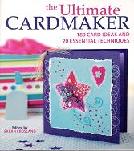
In The Ultimate Cardmaker: 180 Card Ideas & 20 Essential Techniques" edited by Sarah Crosland (ISBN-13: 978-0-7153-2596-4), there's a wealth of card ideas that you could probably adapt for non-tangible gift presentations. I picked it up last week (ah yes...craft books are one of my weaknesses!)

That's a Wrap!

As hinted above, wrapping intangibles can provide excellent opportunities for making use of the odd bit of wrapping paper and various other gewgaws. In "Simply Green Giving: Create Beautiful and Organic Wrapping, Tags, and Gifts From Everyday Materials" (ISBN-13: 978-0-06-112277-4), Danny Seo has a variety of clever gift wrapping ideas that make use of items you might find around the house (for you or I they’re clut-ter-ing the house) or which can be picked up inexpensively at flea markets or thrift stores.


It's a small book with only four chapters, but I think it packs quite a wallop:

  • Chapter 1: Cards and Tags
  • Chapter 2: Boxes
  • Chapter 3: Gift Wrap and Bows
  • Chapter 4: Handmade Giving
Check out Chapter 4, p.102 for a cute way to gussy up that otherwise, innocuous little gift card.

In addition to his book, Seo has a blog with a never-ending parade of creative and innovative, but inexpensive gift or reuse ideas.

Another website with fun wrapping ideas is WrapArt, but, I'm sure there are plenty of other sites like it out there.

Below are some examples of my Inner Krafty Kat in action. Be forwarned! The pix ain't fancy, but they should give a more visual idea of what I'm talking about. These are a few items from my very own wrapping stash: ribbon, tissue paper, bows, and a box! And then, what I did with those items (MacGyver eat your heart out!)


Here is another gift that I wrapped using a technique from the Wrap Art site:

Now, Tag IT!

Old greeting cards are a great alternative to those drab, store bought gift tags so go through that stash (and I know you've got one!) and see what you can come up with. Colorful, shiny, or sparkly cards are good choices. With a hole punch and some ribbon you'll be good to go. You can cut them up into rectangles and take advantage of the random, colorful patterns that emerge, or cut out elements of the card itself, which might lend themselves to making unique or decorative tags. There will probably be snowman, ornaments and other holiday icons a-plenty to get the job done.

If you're feeling particularly ambitious you might have a go at re-using....are you ready for this one....? Old business cards to make a more elaborate gift tag! Because you and I both know, you can't seem to order less than 10,000 of them at a time and invariably the information will probably change before you can possibly use them all. Head right over to Chapter 1 , p. 2 of Seo's "Simply Green Giving" to get the low down on making these tags, as well as a host of other innovative gift tag ideas.

Anyway! That should keep you busy (and clutter free) for the moment!

Happy Wrapping!

twigghugger's Guide to Surviving the Holiday Season - Part 1: Giving, Getting and How!

Sorry it's been so long since I last posted, but my decluttering activities have outstripped my ability to keep up with writing about them. More on that in the future, but for now...

It's hard to believe that Thanksgiving has already come and gone! But, perhaps even more significant for the Packrat, is the day after Thanksgiving, aka Black Friday, which has traditionally marked the official start of the holiday shopping season. All those shoppers lining up at the crack of dawn, waiting for the stores to open....I shudder at the thought of what this means for folk like us. If you (or someone you know) have been diligently working all year long to declutter your space AND can actually see some progress, then this time of the year could represent a serious setback to your hard earned success.

Below are six suggestions to help keep that momentum going. It is by no means an exhaustive list, but should at least get the wheels in your brain turning for “giving” alternatives. Because these ideas may represent a dramatic departure from what you’ve done in the past, it may be a good idea to discuss it first within your giving circle. This way everyone understands what is trying to be accomplished, is on the same page and awkward surprises or disappointments are avoided. To my mind the ultimate goal is to keep the holiday clutter in check.

  1. Exchange the intangible instead of the physical - give or make gift certificates for:

    • services: a day at the spa, a manicure, a hair salon visit, cell phone minutes, ring tones or whatever other doo-dads are hot this year for the mobile communicator

    • an entertainment or event experience: theatre or movie tickets, a Netflix gift certificate (to those who know me...hint...hint...;-) ), dinner for two at a local restaurant

    • personal favors: promises to baby-sit, shovel snow, rake leaves, or keep the [pick an area of the house] tidy

  2. The Gift Card - heck, with perhaps the exception of the personal favors, there's probably a gift card to be had for anything else in the other categories I just listed. You can get them easily enough at the particular establishment or order them from the merchants’ websites (e.g., Barnes & Noble, Starbuck's, Trader Joes, Target's, Red Lobster (yeah!) to name a few). Recently, I've even noticed kiosks at my local pharmacy, displaying all manner of gift cards for sale!

    The main take-away here is that this option facilitates targeted giving, allowing the recipient to choose their very own heart's desire (and from their favorite store to boot), rather than your having to guess at what that might be. How can either of you go wrong?!

  3. Give the Gift of Blog - encourage the writer in your midst. Creating a blog is easier than falling off a log, at least on Blogger it is. I've given the Gift of Blog twice already! My Inner Packrat took a vacation day and I pressed my Inner Krafty Kat into service. In each case, I created and designed a special blog gift card, recycling bits of leftover gift-wrap and greeting cards to create something new and fabulous!

  4. Snacks! - gifts of food are inherently un-cluttery, since they will likely need to be consumed within a specific period of time. As a result, they won't wear out their welcome by taking up too much space, at least for very long. Gifts of food can be store bought or for a nice personal touch, made with your own two little hands! Think mini quick breads, muffins, cakes, cookies, jams or jellies, fruit baskets, cheeses, wine and other beverages, munchie packs for movie night...the possibilities are really endless.

    Two books that survived my Great Book Purge were Gifts of Good Taste and Gifts That Taste Good both edited by Anne Van Wagner Young (Leisure Arts (c) 1989.

    A quick search at either of the two big online booksellers revealed that used copies of these (and other similar) books are still available. Of course, I got my copies before the Internet came along, but I'm sure there's a website or a blog out there that's chock full of ideas to suit your tastes (and yes the pun was intended! {{giggle}}

  5. Charitable Donations - Sites such as Just Give.org or Network For Good.org (also known as "charity portals") offer a variety of options for charitable gift giving such as:

    • charity gift certificates
    • ability to create wedding registries or charity wish lists
    • shopping via charity malls
    • charity auctions

    Options such as these will allow others to make a donation in your name or to have a portion of the proceeds from actual goods purchased through a charity mall, to be donated to an organization or cause (e.g. mycause.com) of your/their choice.

    Just Give provides a variety of tools that enables someone to search and identify organizations to donate to, and which have also been screened as fitting certain criteria, defined at their site (see also Check Out That Charity for additional tips on selecting and evaluating a charity).

    Please Note: that in order to provide this service to non-profit organizations, charity portals do deduct a small fee from each donation transaction (in the case of Just Give it's 3%). This is just something to be aware of and keep in mind when deciding how much to donate or even whether a given charity agrees with this condition and will accept donations generated through portal sites.

    Perhaps you're thinking that charging such a fee might impose a hardship on organizations already strapped for funds, however for some it is actually more cost effective to do it this way then to recruit, retain and pay personnel to provide e-commerce functionality for themselves.

  6. The Wish List - Finally, if you must or still want to give actual "things" the wish list is another way to more effectively focus gift giving by getting items a recipient truly wants or needs. If you've done any kind of online shopping you will probably be familiar with the wish list. If not, the wish list, is similar in concept to the bridal or baby shower registry, allowing you to add selected items from the site to a list for future reference. The drawback is that if there are several sites that a person frequents, gift givers will have to be directed to multiple places, which could be tedious.

    Not to worry! I came across a couple of sites (and undoubtedly there are many, many more) that allow you to coordinate and manage wish lists from multiple sources and share them with others.

    froogle.google.com/shoppinglist

    This link basically takes you to the "Google Product Search" page. In the upper right hand corner is a link to "My Shopping List". If you already have a Google or Gmail account, then you're pretty much already in business to use the service, otherwise you'll need to create an account. This service is in beta, so it was difficult to find any written explanation for how the wish list part works, but it's pretty easy to figure out if you poke around a bit.

    …and no, I’m not a shill for Google! I just either already use or happened to stumble across these services, but if you find or use something you like better, that’s fine too!

    thethingsiwant.com

    Another site I came across was The Things I Want.com I haven't actually tried it, but according to the site "...TheThingsIWant.com is an all-occasion universal gift registry site that enables users to add any item from any site to their wish list. "

So there you have it. I hope these suggestions have given you some ideas to keep from re-accumulating too much stuff over the holidays.

Good Luck and Good Giving!

Next up: twigghugger's Guide to Surviving the Holiday Season - Part 2: The Art of Wrapping "Nothing!"

Sunday, October 14, 2007

Scaling Your Magazine Mountains

Last week in Magazine Madness I discussed my attempts to find solutions for dealing with old magazines. Other than recycling, I really didn't find too many, but I did figure out a better way to organize what I had. In the absence of actually getting rid of stuff, organizing it can be the next best thing to help make clutter more manageable.

My magazines used to be stacked about in various and precarious piles, which I would shift from one place to the other or have to restack. Finally, I decided to go out and get some magazine holders, which come in all sorts of flavors: plastic, metal, cardboard, wicker, translucent, opaque, snazzy colors and so on. I settled on a simple cardboard version, readily obtainable at my local office supply store and easy to assemble by folding together. Also, although I didn't think about this at the time, if my magazine collection ever appreciably dwindles, I can just as easily break them back down for easy storage until they're needed again.

As I said, I had a lot of magazines so to make it less daunting, I would buy a package or two (2 to a package) each week, until I had enough. By doing it this way, I was able to break the task down into smaller segments, and actually see visible progress in moving from a state of disorganization to one that was more orderly. I say unto you, the ability to trick one's Inner Packrat by any means necessary is a skill that should not be underrated.

Now that the magazines are no longer toppling over, I am better able to select which ones I want to review and then determine those I want to keep and those I will get rid of. For example, I had about eight year’s worth of PC World! However, I finally faced up to the fact that there was just no point to that. With the way technology changes so quickly, a lot of the information in them was just plain out of date.

Also, you may or may not have noticed this, but many magazine article topics recur every few years. They are either perennial favorites, or are updated to give them a new spin to address contemporary issues. This is another very good reason to stop hoarding old magazines! At some point what has come around once will go around again.

Yes, I know, for a Packrat things are never quite that easy. In spite of everything I've just said, one thinks they're might still be some useful tidbit of information which might never be written about again. In the case of my PC Worlds there were indeed some tips that I haven't seen again in later issues, so to satisfy myself, I went through them a little at a time, clipping the articles I wanted to save and tossing the rest.

I've just about finished! Whoo Hoo! My ultimate goal is to just keep the most current 3 years of this magazine and drop the oldest each year (sort of like what you're supposed to do with your old bills and banking statements every so often...you are doing that right...!?)

Anyway, happy climbing!

Saturday, October 6, 2007

Magazine Madness

Researching ways to reduce my magazine clutter was one of the things that originally propelled me onto my DeKlutter Quest. In this blog's inaugural post What Yet Another Blog!? I wrote about the difficulty of finding new homes for still usable stuff, and I have definitely found this to be the case when it comes to magazines.

After scouring the Internet for magazine donation, reuse or exchange options, what I have mostly found are articles with generic laundry lists of theoretical suggestions such as senior citizens' homes, medical office waiting rooms, or your local library, but very few references to individuals or organizations who are actually accepting such donations in practice. Organizations tend to have specific needs and wants that don't necessarily include or overlap with the Packrat's need or desire to get rid of things.

Libraries, for example, to the extent that they accept magazine donations at all, tend to be very specific about either the titles they are willing to take or how old they can be. They prefer magazines of a substantive or serious nature such as National Geographic or Architectural Digest as opposed to more popular fare like Cosmo or People. They will probably also require that magazines be no more than 6 months to a year old, (Hahahahahaha! Yeah right!). Depending on the title and a given library's particular needs, they may incorporate such donations into their existing collections, but it is more likely that they will be used in a "Friends of the Library" type group book sale to raise money.

I was able to get rid of several years' worth of back issues of Threads, a high-end sewing magazine in this manner (also a component of my fascination with fabric, written about in these here pages; see also A Fair & Square Send Off). I listed them at Throwplace.com® (see Throwing Away at Throwplace.com® . Oddly enough, an animal rescue non-profit took them to sell on eBay! I'm hoping to strike similar gold with a stash of Brill's Content.

Other places may be looking for vintage magazines or those published before a certain date. One site that I found was only looking for magazines published before 1945. Thankfully, I don't have anything that old! There's also the swapping alternative, either locally based where you can bring the magazines you don't want and trade them for something else, or via an Internet forum where people post their magazine wants and offers. Haven't tried that yet. Of course, if you have the fortitude you too can try the eBay route. As for myself, I haven't quite felt up to that either.

Anyway, together, the two criteria of time and topic may tend to rule out a substantial number of options for many of us, so the traditional paper-recycling route may be the only alternative. However, your mileage may vary depending on the needs of organizations in your particular community, so it doesn't hurt to investigate first. Helpful search terms might include:

  • magazine donation programs
  • magazine donations
  • reading material(s) donation(s) programs
  • reading material(s) donations
Good luck!

Next up, Scaling Your Magazine Mountains. Why? Because they are there and in the way!

Sunday, September 16, 2007

Card Shark

Up until now, I have mostly described projects that involve the removal of an item. However, as discussed in Weeding, even though you are paring down your belongings, there will still be some things that you want to keep or are not quite ready to get rid of just yet.

This summer one such project that I undertook was to pull out and examine the collections of cards and letters I had squirreled away. I am sure you know how that kind of stuff can accumulate! The insidiousness of this kind of accumulation is the strong sentimental attachments that may be associated with it.

Never-the-less, into the fray of sentiment I plunged, pulling the cards and letters from the various spots where I had stashed them. There were

  • letters to and from friends sent and received while in college and shortly after that period (this was before email y'all)
  • Christmas cards
  • birthday cards
  • Valentine's Day cards
  • graduation and other congratulatory cards
  • wedding invitations, souvenir bride & groom photos, and other related ephemera
  • thank you notes
  • unused greeting cards, some purchased while in college! (oh yeah. . .BUT, I have since found new homes for those)
  • etc. (of course a Packrat's always got an etc. category!)

After all this time, I thought I would be able to part with the letters at least, but it turned out to be harder than I thought (Ahhh, sentimentality! The archenemy of the Packrat). But that's okay! Not to worry. If you find it particularly difficult to part with something, don't force it. Getting it sorted and/or organized can be the next best, workable compromise, and might help make stabs at future removal a little easier.

So, while I only managed to get rid of a small portion of the letters and cards, I organized what remained a little better.

  • all correspondence to and from a particular individual is now all together
  • the cards are now organized by type (birthday, Christmas, etc)
  • everything has been put into shoeboxes which are much easier to neatly store in the closet, than the plastic bags they were in before.

If/when I am ready to finally get rid of them they will now all be together in one place, making it much easier to review and at once, rather than unexpectedly stumbling across stashes here or there every so often.

Saturday, September 8, 2007

Check-out That Charity!

As I mentioned earlier this week a clutter Exit Strategy will often involve donating your no-longer-needed items to a non-profit or charitable organization. In this entry, I will discuss a couple of tools available to help you learn more about the organization to whom may have chosen to donate your stuff. They will help you to determine
  • whether an organization is a legitimate non-profit or charitable operation
  • an organization's particular mission and the communities or constituencies it serves
  • an organization's tax-exempt status (useful, if you would like your donation to be tax deductible)
  • if any complaints have been filed against an organization and whether they were satisfactorily resolved

Two of the tools that I have previously used are GuideStar and the Better Business Bureau's (BBB) Wise Giving Alliance at Give.org.

GuideStar

GuideStar is a comprehensive source of information regarding organizations operating within the non-profit sector. Their database includes information on hundreds of thousands of charitable and non-profit organizations across the country. Note: Some of the information in a organization's profile is only available with a premium access subscription, but what is freely available should be more than sufficient for the purposes identified above.

At the search page just type the name of the organization you are looking up into the search field and click the search button. A list of possible organizations from which to choose will be displayed. There are also classification codes (the NTEE Classification System) that you can search by, if you want to pinpoint organizations involved in specific types of activities (e.g. youth, the environment, the arts, etc.) For a more complete listing of those codes visit NCCS.

Anyway, click a link to see additional information. Be forewarned that you will need to register with GuideStar in order to click through to this basic record! Yes, this is a little inconvenient, but registration is free and is much less inconvenient than finding out later that those clothes you realized you were never going to wear again didn't end up getting to other people who could really use them.

Once you have registered and logged in, a free, basic search will yield the following types of information:

  • the organization's name and address
  • a contact person along with a telephone and fax number (email address info in the profile is, unfortunately, only part of premium access. . .)
  • a website if available (. . .however you may be able to pick that up here)
  • a brief description of the organization and its goals
  • the type of tax-exempt status an organization has (there are nearly 40 categories!) and whether contributions to the organization are deductible, as provided by law
  • whether they are required to file an IRS Form 990 or 990-EZ with the IRS and if available, links to .PDFs of those previously filed
  • when the organization's GuideStar profile was last updated
  • whether an organization makes its audited financial statements available to the public
Other information included in the basic profile if available and which might be of interest is

  • year founded
  • location(s) served
  • additional detailed information about an organization's programs and achievements
For additional tips and information to keep in mind when investigating a charity see GuideStar for Donors.

Better Business Bureau's Wise Giving Alliance

Give.org also provides information to help you evaluate a charity. Additionally, they maintain a list of organizations that solicit funds on a national basis (the National Charity Reports Index) with links to reports evaluating them in terms of the BBB's voluntary charity standards. To find information regarding regional or local charities, you will need to visit the corresponding BBB for that region or locale. Go to the BBB Look-up page.

Now you will be better able to make an informed decision about choosing a new home for your stuff.

Happy Giving!

Friday, June 29, 2007

Weeding

In the upcoming months I will be undertaking a variety of weeding projects.

What is this? Well, many deklutter projects involve getting rid of those things you no longer need or use, however you will still end up having to keep some stuff, just not as much of it! For example clothing, magazines, CDs, audio-cassettes (anyone remember mix tapes....!?) Things like that.

Weeding involves the same underlying drill (see Getting Started (Part 2)):

  • Identify
  • Gather
  • and Remove

but is generally undertaken once you begin to tame or gain more control over your klutter. At this stage, it is no longer the overwhelming and undifferentiated mass of stuff it once was. It has hopefully become a little more organized or neater, making it easier to zero in and drill down on really specific deklutter projects.

For example, all those magazines you may have had are now in neat piles (or even better, magazine holders!) and in one area of the living room rather than scatted all over the house. You may have even already gotten rid of a lot of them, but there are still some left that you'd like to go through more closely. Perhaps there are individual articles you would still like to keep. Now you can!

Since I've had quite a bit of success in clearing a few larg-ish swathes of klutter (those extra computers for one thing! See A Tale of Two Computers), I can now begin to do "touch-up" work like this.

So, at my leisure, I will slowly be going through some of my stuff for a second round of cuts.

Stay tuned!

Tuesday, June 5, 2007

Spring Cleaning - The FREECYCLE™ NYC FreeMeet

Identify

Sometime last month, I received an email regarding a FREECYCLE™ sponsored FreeMeet. This event was described as a

. . . chance to unload unwanted, but usable items, take home things you can put to good use and meet other folks from the Freecycle community. Anything leftover at the end of the event will be donated to local charities or recycled to the extent possible. As the name suggests, the Freecycle™ FreeMeet is FREE and open to the public!

You don't need to bring anything to take anything (though a tote bag might help). Please bring portable items only and leave furniture and other heavy stuff at home (log on to www.Freecycle.org to find people who can pick these items up from you).

The FreeMeet was sponsored by a local YMCA, Freecycle™ New York City and the Office of Recycling Outreach and Education (OROE).

Well! My eyes fairly danced at the thought of such a DeKluttering Extravaganza! This would be an opportunity to get rid of an assorted collection of items in one fell swoop, sans some of the difficulties associated with the typical Freecycle™ exchange or other swap strategies that I have previously discussed (see Join a Freecycle™ Group! or Throwing Away at Throwplace.com® for the particulars).

However, my glee was short-lived. Unfortunately, I had another activity scheduled later that same day so I wasn't sure I would be able to attend the FreeMeet and then get home in time to get ready for my other event. Never the less I passed the information on to a friend who is also trimming his klutter. He said he would probably go and graciously offered to take my stuff along, so it worked out.

Gather

I had already identified a variety of things that I planned to part with and had gathered them together in a shopping bag, so all was in readiness. By way of inspiration for my fellow hoarders out there, here's a list of the accumulated objects that I hoped would find happy new homes:


  1. Snowflake candles (3)
  2. Christmas candle
  3. Apple candles
  4. Liz Claiborne purse
  5. Daffodil bookmark
  6. Scooby Doo bookmark
  7. Pair of patent leather red thongs
  8. Ballerina finger puppet
  9. Personal organizers (paper based - 2)
  10. Cloud address book
  11. Ice scream scoop
  12. Fanny pack
  13. Coaster
  14. Washington DC marble/pewter paperweight
  15. Stationery set
  16. Kiddy kalculator - (2)
  17. Samsonite garment bags (2)
  18. Wallet
  19. Camera (non-digital)
  20. Cosmetic bag and mirror set
  21. Plastic lei
  22. Assorted paperbacks (9)

Assorted Paperbacks


  1. Connecticut - Off the Beaten Path: A Guide to a Unique Place
  2. Possessing the Secret of Joy - Alice Walker
  3. If Beale Street Could Talk - James Baldwin
  4. The M.D. - Thomas M. Disch
  5. The Dark Tower II: The Gunslinger - Stephen King
  6. With a Tangled Skein - Piers Anthony
  7. Native Tongue II: The Judas Rose - Suzette Haden Elgin
  8. Dragon's Egg - Robert l. Forward
  9. The Dark Tower III: The Waste Lands - Stephen King

Not a bad haul, eh?

Remove

At the appointed time my friend swung by and picked up my stuff and proceeded to the FreeMeet.

Later he called to tell me that it was pretty easy. He was met at the door by volunteers, who took the things he had brought and whisked them to the area where the actual swapping was taking place. He didn't even have to stay or go down to the swap area. However, he did go just to take a peek to see how it was set up.

I don't know if all FreeMeets are organized in this manner, but this format certainly worked for us!

Sunday, May 6, 2007

The Diskard

The Diskard was one facet of my overall Electronics Discard Project (EDP), which I alluded to in the Digital Spring Cleaning entry last week.

Identify

Somehow, I had managed to accumulate about 13 boxes of 5.25" diskettes. Each box held or was capable of holding about ten diskettes, twenty with a little shameless cramming. I also had a number of what I think were never used, blank diskettes that my father had given me at some point. For those of you who may not be getting the picture (or don't want to face it), let me spell it out:

I HAD AMASSED A COLLECTION OF NEARLY 300 5.25" FLOPPY DISKETTES!

And, as some of you may also be very well aware, 5.25" diskettes are definitely a storage media of the past. For the less technologically savvy among you, in computer years, think of them as dinosaurs! So you know they weren't really serving any useful purpose other than to collect dust and take up space on a shelf in my apartment!

Why didn't I just toss them and be done with it!? Even with the length of time those diskettes had to have been sitting there, I still thought there might be some useful data worth preserving (Well, you never know!). My plan was to take a quick look at them, copy any files I wanted to keep over to 3.5" diskettes so that I could access them on my current computer, and delete the rest. Easy enough, right?!

Well that part of my plan proved to be a huge stumbling block on my DeKluttering Path. One of the three computers I had been harboring in my small abode (another facet of the EDP to be discussed in a future post) had both a 5.25" and 3.5" disk drive. Ordinarily it would have been just the ticket, however, its 5.25" drive was not working properly, and I never dreamed how difficult it would be to find a comparable set-up. Actually, finding a 5.25" drive wasn't even the main problem. There are plenty to be found on eBay! I even went to the trouble of setting up an eBay account in the hopes of successfully bidding for one! The true predicament became figuring out which one of the hundreds of such drives available would be compatible with the other computer system I had, which could accommodate a 5.25" drive, and then to somehow figure out how to install it correctly.

The only other solution, with which I occasionally flirted, was to purchase yet another system with the requisite floppy drives (also available on eBay), but that just seemed like waaaay too much trouble. It also involved bringing another computer into a house which already had too many of them, rather than getting rid of one. Basically, to my mind, a big step backwards!

Gather

However, I am nothing if not persistent. I finally thought to contact a cousin who troubleshoots and repairs computers and posed my problem to him. He was able to scavenge up a system for me, but more importantly, one that I could use at his house, rather than mine! But, I wasn't quite out of the woods yet! Both of us have busy schedules so it took a while for us to hook up. In the meanwhile, I got everything organized into a shopping bag and set it aside until we were finally able to get together.

<<--l-->>

Many of the diskettes were unreadable. It is very likely that over time they had simply gone bad. Also, another techy friend of mine advised that 5.25" drives can be finicky and may fail to read perfectly good diskettes. Oh well! I did the best I could, under the circumstances, and more or less accomplished my goal of copying some stuff, deleting other stuff, and finally determining what could be trashed. It ended up taking eight or nine hours, but I was determined and my inner Packrat was appeased. Plus, my cousin and I also had a really great time, just shooting the breeze while I did it.

I could now proceed to the "Remove" step of the DeKlutter drill. Thanks Julio!!!

Next up! My floppy diskette exit strategy: Green Disk!

Sunday, March 4, 2007

Fabric Free

Many years ago, one of my hobbies was sewing. I used to subscribe to several sewing magazines and through them discovered fabric clubs. I ended up joining three of them! Each month I would receive swatches in the mail. Of course, I drooled over those samples while visions of garments I would sew myself, danced in my head! I guess you can see where this is heading, right?

Although I had accumulated quite a bit of fabric, alas, I never quite got around to actually sewing anything with it (I even kept those little swatches! Yup! Discovered a whole shoebox of 'em while I was poking around a closet. Well, they were perfectly good! How could I possibly throw them away...?!!)

Identify

While I do hope to get back to sewing one day, for now that won't be happening, so I finally faced up to the fact that it was time to find the fabric a new home. I threw the phrase "donate fabric" into the search engine to see what would turn up. One possibility that presented itself was quilting groups or non-profit organizations looking for fabric to make blankets on behalf of various constituencies (e.g. children who are going through difficult times whether due to illness or family issues (e.g. Project Linus, IPump.org, Inc.). Another possibility, which had not occurred to me, were animal rescue organizations. I discovered that many sponsor Cage Comforter Programs. Volunteers make little quilts or blankets for the animals they shelter while they await adoption. Apparently the blankets are comforting and are much more attractive to potential new owners, then shredded newspaper.

However, I decided to donate my fabric to Materials for the Arts (MFTA), a "materials exchange" organization, NOT to be confused with an exchange or swap site, which I discussed previously (see The Exchange Game). Materials exchanges are organizations (often non-profit) that collect donations of various types of excess materials from businesses and/or individuals. Others can then purchase these materials for a much lower price than they would ordinarily cost. In the case of MFTA, purchase is restricted to NYC Department of Education art teachers, government agencies and not-for-profit arts and cultural groups, social service, health, and environmental organizations that have an ongoing art program. However, other materials exchanges may have different stipulations. Some other materials exchanges that I came across during my internet wanderings were Materials Exchange Center for Community Arts Home in Eugene, Oregon, Scrapbox in Ann Arbor, MI and St. Louis Teachers' Recycle Center, Inc. in Missouri, but that is by no means an exhaustive list. Check out MFTA's resource page for more possibilities in the NY tri-state area. The Find Reuse directory at Redo.org is another handy tool for locating such organizations in other parts of the country.

Gather

Once I had some idea of where the fabric was going (i.e. my Exit Strategy), I dragged a stepladder over to the closet where I had it stashed, waaaaay up on a top shelf, and pulled it all out so I could see exactly what I had. I guestimated the value as best I could and made a list describing the type of fabric, the color or pattern and its yardage.

I have to admit this did set off a bit of a Klutter Krisis, until I got all the details finalized. I had to register as a donor at the MFTA site, submit a list of the items I was donating via their online donation form and then wait for someone to contact me to confirm whether my donation would be accepted. In the meanwhile, I tried to minimize the disruption as much as possible by keeping everything neatly organized in shopping bags until the final removal.

Remove

Fortunately, somebody contacted me by phone within a day or so and thankfully MFTA was more than happy to accept the donation. A drawback is MFTA will only pick up items that weigh at least 250 lbs and/or have an estimated monetary value of $1,000. Otherwise, you will need to drop it off personally at their warehouse or mail it to them. This is what I ended up doing, since their drop-off hours were very limited (Mondays, Wednesdays and Fridays between 9AM and 3PM).

Once I got the final go ahead, I spent an afternoon getting everything packed up and ready to go. I should have been doing schoolwork, but that's another story. Plus this was far more enjoyable. I was reducing clutter and knew it would be going towards a great cause! Since then I have received several acknowledgements (including a reciept for tax purposes), both from MFTA as well as the ultimate recipient, a visual arts teacher working at a public school through Studio in a School, which places professional artists in public schools throughout NYC's five boroughs.

<<--I-->>

By providing a relatively inexpensive source of arts and other supplies, materials exchanges enable teachers and organizations to deliver services or provide programs that enrich their communities educationally, artistically and culturally (check out MFTA's recipient list). They also help to divert huge quantities of materials that would otherwise end up in the landfills.

Voila! A personally satisfying and eco-friendly solution for reducing clutter!

Alright, alright! So, what if I did keep a few pieces of the fabric. Releasing one's inner Packrat doesn't happen over night, you know!

Sunday, February 25, 2007

Throwing Away at Throwplace.com®

In the Exchange Game I talked about exchange or swap sites as one of the tools a Packrat should include in his or her Decluttering Arsenal. In Something for the Bibliophile I discussed the Bookins site, which is specifically for the exchange of books (hard cover, paperback) and audio books. This week I would like to tell you about Throwplace.com®, an exchange site where all sorts of items can be posted for exchange. They describe themselves as "The Internet's Landfill Alternative".

I stumbled across this site in the course of searching for, what else? Recycling information! Unfortunately, I initially forgot to bookmark the site! Also, of the many sites I'd viewed that morning, I couldn't remember where I'd specifically seen the link to Throwplace. Adding even further insult to injury, I hadn't even correctly remembered the name of the site. I kept thinking it was "Drop Place" or something like that. As you can see I was batting a thousand. How-some-ever, I am nothing if not persistent. Oddly enough, for some reason I was able to remember one of the sites they had listed as having written about them, and was eventually able to get the URL in this manner. Needless to say I bookmarked the site immediately this time!

Why did I go through so much trouble to find my way back to this particular site? Well during my initial visit, I just really and immediately liked the site's look and feel. I wanted to poke around it some more. When I did get back to it, I found the site was easy to navigate and getting set-up was equally simple. As you know simplicity is one of my main criteria for giving something the thumbs up, and as I've also said, this quality is particularly important in the war against clutter.

It's free to set up a basic account, which will allow users to list or "throw" items in any of the following four categories:

  • US Charities
  • International Charities
  • Business/Individuals
  • Up-For-Grabs

    However, only premium users can "take" from all four of those categories. Regular users are just allowed to "take" from the "Up-For-Grabs" section. But, since our main goal is to get rid of rather than acquire things, this should suit most purposes just fine. I set up an account back in October and since then have been able to dispose of about 27 out of 30 or so of the items that I've listed. Many of these items have included books, which for whatever reason, could not be listed on Bookins or were not requested after listing there.

    Once someone requests one of your listed items, you will be sent an email with a link to the request. You will then need to sign in to obtain additional information regarding the request. After logging in, if there are multiple requests for the item in question, you can select the one you want and accept their request. Once you have accepted a request that "throw" is removed from the browse list of available items. An email is then sent to your chosen recipient advising them of your acceptance. Each of you will then receive an email containing each other's email address so that you may contact each other to complete the arrangements for the exchange. If for whatever reason, a "throw" falls through, relisting the item is simple by using the appropriate links in the item's listing. However, see their FAQ and Overview pages for all the ins and outs.

    Once your account is set up, listing and keeping track of your "throws" is a snap, which are organized on your account in separate sections based on whether an item has been accepted (Older Throws) or not (Active Throws). Other helpful features include links to the US Postal and UPS sites for calculating shipping costs, along with a few additional tips related to getting your item to its intended recipient. Of additional and potential interest are various green or environmental resources at the site, such as

  • a directory of socially responsible vendors, retailers and suppliers
  • other green or eco-friendly related sites
  • participating US 501(c)(3) verified charities as well as International charities (not verified) or US charities who lack 501(c)(3) status charities
  • a classified ads section

    However, these extras DO NOT get in the way of, what for me anyway, is my main goal in using the site: to facilitate the disposal of unwanted items!

    In closing, I would like to offer one more final good word about Throwplace. I have found their Customer Service to be very friendly and helpful in resolving the few problems I have encountered, thus far. One particular issue involved my ISP, who on two separate occasions tagged their automated notification emails as spam and blocked them. However in distinct contrast to my ISP, whose basic stance is to require their paying customer's to chase around the necessary documentation before they will remove such blocks, all the while making you feel like some common bulk spammer, Throwplace worked cooperatively with me to get the problem resolved. This only served to enhance my overall positive attitude towards them and I would highly recommend at least checking them out.

    So then! The twig hugger drill is as follows:

    1. Identify that quaint little gewgaw quietly collecting dust in some corner of your home
    2. Sign up for a free Throwplace account and list that delightful trinket using Throwplace's simple form
    3. Wait for that lucky someone to espy your item in the browse list and to quickly request it before someone else does!
    4. Accept their request lickety split and email the lucky recipient to make whatever final arrangements
    5. Then, and only then Gather this precious knickknack and prepare it for shipping
    6. Remove said item from your home and send it off to its new one

    FINITO!

  • Sunday, February 18, 2007

    Something for the Bibliophile: Bookins

    With this entry I begin to discuss specific solutions that I found and have used for divesting myself of clutter.

    Step 1: Identify

    I'm sure many of you may feel like you have too many books. What?!?! Impossible! You can never have too many books you retort. Alright, so maybe you have more books than you have room for. This is my problem. My wall unit shelves are stuffed to the brim with them. Books are jammed in there every which way: upright, sideways, on top of the uprights, etc. They were also stacked in a couple of piles on the floor. As you can imagine this accumulation was an obvious decluttering target and one that I attacked first.

    Having identified the general project to be undertaken, I then zeroed in a little deeper. I reviewed my shelves and piles for books that I thought I could possibly bear to part with, especially as some of my interests had changed over time. Another friend of mine, who's also got scads of books, shared the following technique. She asked herself:

    "Could I readily get this book at the public library?" If the answer was yes, she would then place it in a mental Possible Discard pile. She then asked "Could I readily get this book at the [insert your choice of small or remote location here] public library?" Again, if the answer was still yes, she then moved it to her mental Definitely Discard pile, but with a clear conscience!

    The point is, find the trick that helps your Inner Packrat to relinquish an item. This way it becomes more of a fun game than a traumatic chore.

    In Getting Started, Pt.2 I talked about making sure you have an Exit Strategy for an item (or items), to avoid setting off a Klutter Krisis. So, before actually touching or moving one solitary book, I made sure to figure out where stuff was going first. I threw the terms "book" and "exchange" or "swap" into my favorite search engine and came across a number of such sites. However, the one that I liked the most and decided to try was Bookins. It was the site's appearance and simple interface which ultimately persuaded me to give Bookins a whirl.

    Step 2: Gather

    I''ve said this before, but it can't be repeated often enough: SOLUTIONS FOR THE PACKRAT NEED TO BE AS SIMPLE AS POSSIBLE. And, I found Bookins to definitely be that. It's free to set up an account, although there are also premium options available, with a few more bells and whistles. Once I took the plunge, I was up and running with it in a matter of moments.

    Only then did I begin to gather my chosen titles so I could list them, also very easy to do. Once you've set up your account and are logged in, you simply type in a book's ISBN number, which now-a-days usually appears on a book's back cover over the barcode. For older books this information can be found on the verso or copyright page. In most cases, entering this information will retrieve an image of the book's cover. You then add additional information describing the book and certify that it is in good condition according to the following criteria:

  • books must be in like-new condition, or if used, have only minor signs of wear
  • all pages must be attached to the binding
  • have only a limited number of dog-eared pages, and
  • few if any small stains or minor tears
  • Finally, hit submit and POOF! It's listed.

    The Bookins site searches its database for someone who has put that title on their wish list, sends email alerts to both parties to facilitate the exchange and also provides either parties the ability to track the status of the shipment. Once the material is delivered to the recipient, points are credited to your account, which you can then use towards available books that you might like to request from the Bookins database.

    Step 3: Remove

    For my first go-round I was very fortunate. Almost immediately (within about 24 hours), I received requests for several of the titles that I listed.

    One of the Bookins features that I especially like is the ability to print a pre-paid US Postal Service Media Rate shipping label when you send a book. Note: Once you print the shipping label, you must send the book within 48 hours or you will be charged for it (at the moment $3.99) Otherwise, you are only charged when you request and receive a book (also $3.99).

    Anyway, as I received requests, I printed out the label, put my book in a mailer, attached the shipping label and dropped it in the mailbox. I didn't even have to set foot in the post office!

    Really, what could be easier!?!

    To date I have listed 11 books, but actually traded (or removed in twigg hugger parlance) 7 through this site. However, according to Bookins, certain categories of books, such as novels or best sellers, are particularly popular. So your particular success will likely depend on the titles you have to trade.

    <<-->>

    Now some may ask, "How is using Bookins or a similar swap site different from borrowing a book from the Library?" Well for one thing, yes, you can borrow books from the library, however, the library may not be willing to take any of your unwanted books, which for our purposes, is a key point. Additionally, if they do take used books, they may only be willing to take very specific titles or types of materials. This is one of the problems I ran into when I first began to search for decluttering solutions-- lot's of generic lists with theoretical suggestions rather than ones that were practical or concrete.

    Another advantage of using an exchange site such as Bookins, is that as a book lover you probably don't want to stop acquiring books altogether. You may just want to divest yourself of those books you no longer want and replace them with others. By using a swap site, like Bookins, you can keep traded books for as long as you like and then re-list them for trade when your done with them, whenever that is, rather than whatever the library's borrowing term happens to be. In this way you control the ebb and flow of books in and out of your space.

    And that's the name of the declutter game. Exercising control over your clutter, rather than the other way around!

    Friday, February 2, 2007

    Join a Freecycle™ Group!

    When I first made a serious decision to reduce my clutter, Freecycle™ was one of the first options I considered. I found out about them while poking around on the NYC Wa$tele$$ site several years ago. For a number of reasons I didn't actually end up using Freecycle™ (or as it is formally known The Freecycle Network™), but I'd still like to mention this option first, since others may still find it to be a particularly helpful and convenient decluttering solution.

    Freecycle™, a national nonprofit, is only 4 years old, but has already spread like wild fire across the globe. It was originally started in Tucson Arizona in order to promote waste reduction in their downtown area and to help preserve the desert landscape which was in danger of being taken over by landfills. However, it is now essentially comprised of individual groups, not only in this country, but all across the world! Their sole and simple purpose is to enable people to exchange or get rid of unwanted stuff.

    One of the precepts of eco-friendliness is that one's local actions have global effects. So the things we do (or don't do) within our own communities, for better or for worse, can have far reaching implications in places distant or remote to us. With that in mind, the basic philosophy of this organization can be viewed as uncomsumption at its easiest and local best, since each group is set up in and tends to serve a particular community.

    Membership in Freecycle™ groups is free and the stuff you are giving must also be free as well as "...legal, and appropriate for all ages." Freecycle™ groups are moderated by volunteers. You essentially sign on to a list serve and group members post their various needs and wants. If there isn't a group in your area, Freecycle™ suggests that you might consider starting your own (click on "Start a Group" for instructions) and provides various resources to help the newbie get started (see the
    FAQ).

    For more infomation, their contact information is as follows:

    info@freecycle.org
    The Freecycle Network™
    P.O. Box 294, Tucson, AZ 85702

    So, in keeping with the twigghugger mantra: Identify, Gather and Remove, a simple strategy using Freecycle™ might be:

    1. Identify (but don't yet move in any way) those piles of sweaters you've been meaning to give away
    2. Join a Freecycle™ group
    3. Send an email to your Freecycle™ group's email list
    4. Wait for responses to the email
    5. Select a recipient
    6. Make p/u arrangements with your chosen recipient
    7. Then, and only then Gather those sweaters and place them in a shopping bag
    8. At the appointed time, Remove sweaters from your premises and transfer to their new owner!

    And We're DONE!

    Friday, January 26, 2007

    Getting Started (Part 2)

    Once you pick a Project, that is, you have selected an area of attack, you need to avoid setting off a Klutter Krisis, which can further impede your ability to get going. In this situation you have pysched yourself up, actually gotten together the items to be discarded, BUT, suddenly lose steam. The items either end up in the middle of the floor or in some other state of disarray.

    All you've really done is shift or rearrange the original pile. To avoid this state of affairs, keep in mind this simple mantra!

  • Identify
  • Gather
  • and Remove

    You must have an exit strategy for your stuff, that is, the actual way in which you will "unconsume" your item(s). So, before you shift that pile, empty that draw, or clear that shelf, be sure to have a new home for it in mind.

    Advance planning will help you face the clutter head on, rather than giving in and avoiding it. A good exit strategy also creates permanently clear space! Unless you bring more stuff in, newly created space stays clear! This is incredibly self-reinforcing and should encourage you to keep up the good work.

    We are now ready to get down to business, and I will begin to talk about some of the specific solutions that I found to do just that.
  • Friday, January 19, 2007

    Getting Started (Part 1)

    So! You've finally come to the realization that it is time to take a stand against The Klutter! But how do you get started? How do you overcome that internal inclination to hoard?

    Before getting down to the nitty gritty of "unconsumption", I thought it would be useful to take a moment to talk about approaches for getting started, which can be a major stumbling block.

    The way I approached it was to slow down, get ahold of myself and take a moment to examine my stockpile. Rather than view it as an undifferentiated whole, I broke it down into discrete and indvidual de-cluttering projects.

    For example:

    • a single pile of books or magazines, not necessarily all the piles or the whole bookshelf
    • one particularly troublesome kitchen draw not necessarily all the kitchen draws or cabinets
    • just the medicine cabinet (or better yet, one shelf in the medicine cabinet!) not necessarily the entire bathroom

    You get the idea.

    Projects by definition (and for our purposes) should be self-contained. They should have a clear beginning, but more importantly, a clear END.

    By taking this approach, you can trick your Inner Packrat. The investment of time or effort for mini-projects is much less, and will seem less like a chore to be avoided at all costs. Also, by setting finite goals in advance, once completed, You Are Done, at least for the time being. Now, you can just walk away with a clear conscience and a real sense of accomplishment, which is self-reinforcing. If you feel motivated to do more, go with it, but anything else after that point is pure gravy!

    The point here is to break it down into manageable and less intimidating slices so you can get started in the first place. You do not need to attack the whole shebang in its entirety. Otherwise you will become overwhelmed and say to yourself "Hmm...maybe I'll do this later...." etc. etc.

    If you change your view of clearing clutter from being an Event to more of ongoing process or lifestyle change you will probably improve your ability to keep what you have under control as well as to rethink the acquisition of stuff to begin with.

    Next up: Getting Started (Part 2) - Avoid Setting off a Klutter Krisis!